
Outdoor furniture is an investment, and proper seasonal care can make a major difference in how long your umbrellas, cushions, pillows, and other outdoor textiles continue to look and perform their best.
For homeowners throughout Loudoun County, Fairfax County, and Clarke County, Virginia, winter weather can be especially hard on outdoor fabrics. Cold temperatures, moisture, fallen leaves, pollen, dirt, mildew, and repeated freezing and thawing can all shorten the life of patio furnishings if they are not cleaned and stored correctly.
Before storing your outdoor umbrellas, cushions, and pillows for the winter, take a little time to clean, inspect, protect, and properly store them. A few simple steps at the end of the season can help protect your investment and make spring setup much easier.
Start With a Thorough Cleaning
Before anything goes into storage, remove as much surface dirt and debris as possible.
Brush or vacuum away:
- Dirt and dust
- Leaves and small twigs
- Pollen
- Grass clippings
- Food crumbs
- Bird debris
- Other outdoor residue
This is particularly important in areas such as Ashburn, Leesburg, Purcellville, Middleburg, Sterling, Fairfax, Chantilly, Vienna, Herndon, Berryville, and surrounding Northern Virginia communities, where outdoor furniture can accumulate significant pollen and organic debris during the warmer months. Never store cushions or umbrellas while they are dirty. Organic material left on outdoor fabric for several months can contribute to staining, mildew, odors, and deterioration.
Always Follow the Manufacturer’s Care Instructions
Before applying any cleaner or fabric treatment, check the manufacturer’s recommendations. Outdoor textiles are manufactured from many different materials, and a cleaning method that works perfectly for one fabric could damage another.I commonly work with 100% acrylic outdoor fabrics, which are popular because of their durability, colorfastness, and resistance to outdoor conditions. For 100% acrylic fabric, I use a cleaning solution made from approximately 50% water and 50% bleach when appropriate. Yes – bleach.
However, this is extremely important: do not assume bleach is safe for every outdoor fabric. This approach should only be used when the fabric manufacturer confirms that bleach cleaning is acceptable. Acrylic performance fabrics are different from ordinary household upholstery fabrics, cotton, polyester blends, and many other textiles. When in doubt, check the fabric label or manufacturer’s cleaning instructions before proceeding. Inspect Every Seam, Zipper, and Fabric Panel
Winterizing is also a good opportunity to perform a detailed inspection.
Look closely at your:
- Umbrella canopies
- Seat cushions
- Back cushions
- Throw pillows
- Cushion covers
- Zippers
- Seams
- Wel
- t or piping
- Tie straps
- Fasteners
Small problems are much easier and less expensive to address before they become major repairs. A loose seam, small tear, damaged zipper, or weakened section of fabric may continue to deteriorate during storage or when the furniture is placed back into service the following spring. Think of fall maintenance as preventative maintenance for your outdoor furniture. Let Everything Dry Completely.
This may be the most important step in the entire winterizing process.
Every umbrella canopy, cushion, pillow, and removable cover should be completely dry before storage. Not almost dry Completely dry. Moisture trapped inside cushions or between layers of folded fabric can create ideal conditions for mold and mildew. Once mildew becomes established inside cushion foam or textile fibers, removing it can be much more difficult.
After cleaning your outdoor textiles, allow plenty of time for them to air dry in a well-ventilated area. If possible, choose a dry, sunny day rather than waiting until the last wet weekend of fall. In Northern Virginia, where autumn weather can shift quickly from warm and sunny to cool and damp, planning ahead can make the process much easier.
Protect Outdoor Fabric Before Winter Storage
Once your fabrics are clean and completely dry, I recommend applying an additional fabric protectant.
One product I use is KIWI Camp Dry.Applied properly, a protective treatment can help improve resistance to moisture and staining and add another layer of protection before your outdoor textiles are placed into storage. Always read and follow the product manufacturer’s application and safety instructions, including recommendations regarding ventilation, drying time, fabric compatibility, and the number of coats.I generally recommend treating outdoor fabric at the end of each outdoor season before winter storage. Regular preventative care is far easier than trying to restore badly stained or deteriorated fabric later.
Store Outdoor Cushions and Pillows Properly
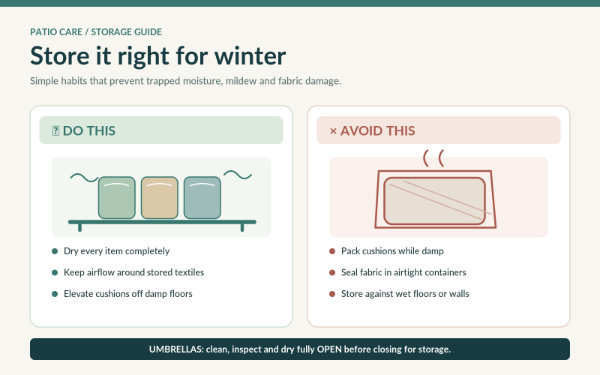
Once everything has been cleaned, inspected, dried, and treated, the final step is proper storage. Outdoor cushions and pillows should ideally be stored in a clean, dry, well-ventilated environment.
One mistake homeowners sometimes make is sealing outdoor cushions inside completely airtight containers for the entire winter. That can create problems. Even a small amount of residual moisture can become trapped inside the container. Without airflow, that moisture can contribute to mold, mildew, and unpleasant odors. Instead, choose storage that protects your cushions from water, pests, dirt, and debris while still allowing appropriate ventilation. Depending on your home, possible storage locations may include:
- A clean garage
- A dry basement
- A climate-controlled storage area
- A ventilated outdoor storage box
- A protected storage room
- A clean shed that remains reasonably dry
- Avoid placing cushions directly against damp concrete floors or exterior walls. Elevating them slightly can provide additional protection from moisture.
Don’t Forget Your Outdoor Umbrellas
Patio umbrellas deserve the same attention as cushions and pillows.
Before storing an outdoor umbrella:
- Remove dirt, pollen, and debris from the canopy.
- Clean the fabric according to the manufacturer’s recommendations. Allow the umbrella to dry completely while fully opened. Inspect the canopy, seams, ribs, lift mechanism, cord, crank system, and hardware for signs of wear.
- If the canopy can be removed from the frame, follow the manufacturer’s instructions for removal and storage.
- Never close and store an umbrella while the canopy is still damp. Moisture trapped inside folded fabric is one of the fastest ways to encourage mildew.
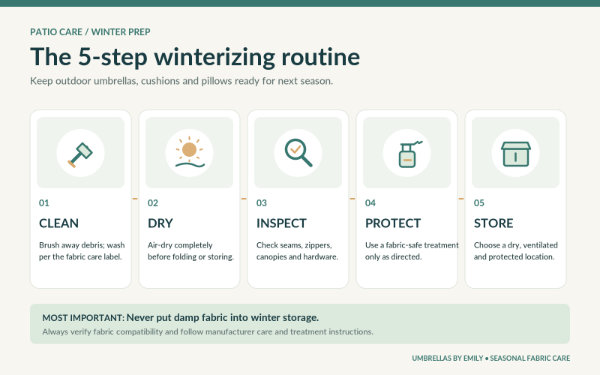
A Simple Outdoor Fabric Winterization Routine
For most quality outdoor acrylic textiles, the basic seasonal routine is easy to remember:
Clean. Dry. Inspect. Protect. Store.
Following those five steps every year can dramatically improve the appearance and longevity of outdoor cushions, pillows, umbrellas, and other patio fabrics. For homeowners throughout Loudoun County, Fairfax County, Clarke County, and the surrounding Northern Virginia region, properly winterizing outdoor furniture is especially worthwhile. Our seasonal weather exposes outdoor furnishings to intense summer sun, heavy pollen, thunderstorms, humidity, falling leaves, winter moisture, freezing temperatures, and repeated temperature changes throughout the year.
Good maintenance helps your outdoor living space stay beautiful season after season.
Protect Your Outdoor Furniture Investment
Quality outdoor cushions, custom pillows, umbrella canopies, and performance fabrics are designed to withstand the elements—but that does not mean they should be neglected. A little preventative care each fall can help reduce staining, mildew, premature fading, fabric deterioration, and costly replacement.
Before winter arrives, take the time to:
Clean your outdoor fabrics thoroughly.Follow the manufacturer’s care recommendations.Inspect seams and hardware for damage.Allow everything to dry completely.Apply an appropriate outdoor fabric protectant. Store cushions and umbrellas in a dry, ventilated location. Your patio furniture will be much more likely to come out of storage looking clean, fresh, and ready for another season outdoors.
Stay tuned for more practical tips, professional advice, and useful information designed to help consumers make better decisions about caring for their outdoor furniture, cushions, umbrellas, and performance fabrics throughout Loudoun County, Fairfax County, Clarke County, and Northern Virginia.